
Back of house training programs: a complete guide
By Janos Laszlo
- back of house training
- BOH training
- kitchen training
- chef training
- food safety training
- hospitality LMS
- kitchen onboarding
- HACCP
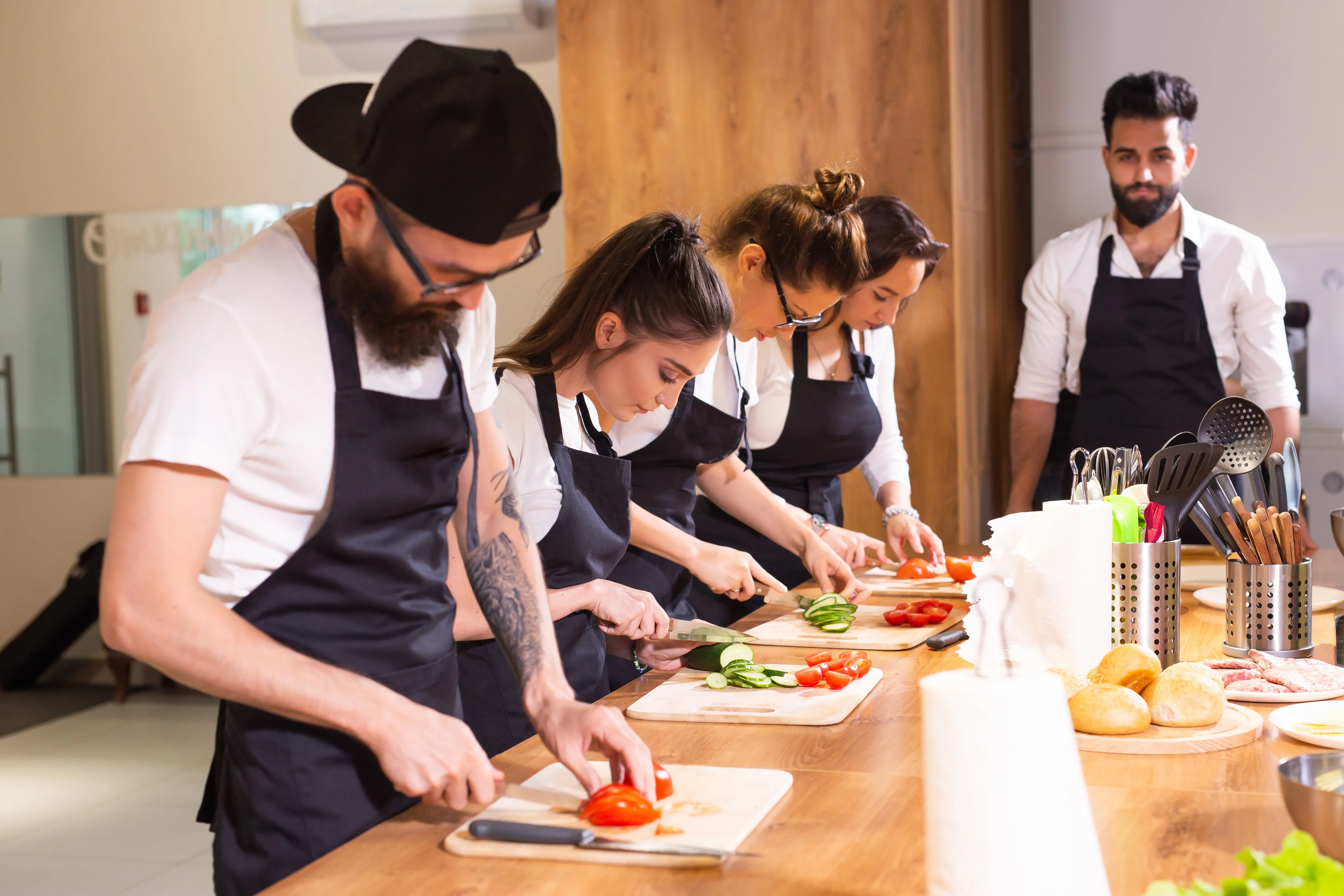
Ask most operators how their kitchen trains new starters and the answer is some version of “they shadow a senior chef and pick it up.” Ask them to prove the team is trained when an audit lands, and the scramble begins. Back of house training is too often left to chance, run entirely on the job, dependent on whoever is on shift that day.
That does not scale. If every chef has to be taught one-to-one by the head chef, onboarding is slow, standards live in one person’s head, and consistency drops the moment that person is off. This guide sets out what a complete back of house training programme actually contains, why the “kitchens can only be taught on the job” belief is wrong, and the compliance training BOH staff must have.
What a complete back of house training programme contains
A complete programme has two parts. The first is the mandatory compliance training, which is set by the country or city you operate in and is non-negotiable. The second is your own venue’s content: how your kitchen does things, to your standards. Both matter, and most kitchens are weak on the second.
The order is straightforward. A new BOH starter should clear the mandatory compliance training first, because it is the legal floor they cannot work without. From there they move into your venue’s standards: station skills, prep, equipment, plating, cleaning, and the specifics of how your kitchen runs. Compliance keeps you legal. Your own content keeps you consistent.
Why “back of house can only be trained on the job” is wrong
There is a common belief in leadership teams that front of house training is the digital, structured part, while back of house can only be learned on the job with no digital involved. That is an absolutely wrong statement, and it holds kitchens back.
First, the newer generation of chefs already consume techniques and knowledge from social media and digital platforms. It is how they learn. Second, we have clients who run Pocket Trainer for back of house only, because the kitchen leadership saw the value first. They understood that relying solely on on-the-job training and senior chefs makes it very difficult to scale and to onboard every chef properly.
The truth is that every department, front or back, has topics that can be digitised and automated. Colour-coded chopping boards, food allergens, knife skills, equipment knowledge: none of these need to be taught one-to-one on a busy pass. They can be learned digitally, before the chef ever stands at the station.
The real cost of the head chef training everyone
The old-school mindset says the head chef trains everybody. They stand beside each new joiner and hold their hand the whole way. It feels thorough. In reality it is the most expensive way to run a kitchen.
Start with the obvious: it does not scale. One person cannot personally train every new starter and keep standards consistent as the team grows or a second site opens. But the bigger cost is what the head chef is not doing while they train. A head chef has far more to offer than teaching the basics one by one. That is the time they should be spending on innovation, developing new dishes, guiding their senior people, supporting front of house, sourcing better ingredients, and chasing new suppliers. Every hour spent hand-holding a new starter through knife skills is an hour not spent on the work only a head chef can do.
This is the whole point of a training platform. You cannot digitise everything in a kitchen, but you can digitise a lot. So whatever can be automated should be: the learning and the evaluation. That frees the head chef to spend their time on the things that genuinely need them, and to check competency rather than teach every basic from scratch.
What you can digitise in a kitchen
This is the mindset shift, and it usually has to happen with older, experienced head chefs. Front of house records how to make a cocktail, set a table, or fold a napkin. A chef can record their own standards in exactly the same way: the different cuts, how to plate a dish, how to clean a station.
That recorded content becomes your venue’s training library. It captures the head chef’s standards once, so every new starter learns the same way, instead of a different version depending on who trains them. The head chef stops being the bottleneck, and their knowledge stops walking out the door when they do.
Does digital training replace hands-on kitchen training?
No, and it is not meant to. Digital training handles the knowledge and the standards that can be learned before or alongside the hands-on work: compliance, terminology, equipment, allergens, the steps of a technique. Hands-on practice then builds the skill. The point is to stop wasting senior chefs’ time teaching the same basics over and over on the floor, and to free them to coach the things that genuinely need a person beside you. Used together, the chef arrives at the station already knowing the theory, so on-the-job time goes further.
If you want to see how a kitchen builds this kind of library, book a 15-minute demo and we will walk through it with your operation in mind.
The compliance training back of house staff must have
Compliance requirements depend on the country, and they are not the same everywhere. In the UK the bar is much higher than in the UAE.
In the UK, the core mandatory training for kitchen staff includes food safety (levels 1, 2 and 3 depending on role), COSHH, food allergens, and health and safety. Fire safety and harassment training increasingly apply to BOH staff too, but the main ones for chefs are COSHH, food safety, food allergens, and health and safety.
In the UAE, the musts are HACCP, Person in Charge (PIC), and basic food safety.
These are the legal floor. But anyone who has worked in a kitchen knows there are many other courses that help chefs, not just front of house staff. The point of a complete programme is to cover the mandatory training without paying a premium for it, then build your own standards on top.
Which BOH compliance courses are free on Pocket Trainer?
Many platforms charge a premium for accredited compliance courses. On Pocket Trainer the core ones are included as standard, accredited by RoSPA in the UK. That covers the UK food safety levels, COSHH, allergen awareness, and health and safety, alongside the UAE courses such as HACCP and basic food safety. You can see the full set on the hospitality courses page. Having these as default, rather than as paid add-ons, means the mandatory floor is covered the day you start, and your budget goes into the venue-specific training that actually differentiates your kitchen.
How to build your back of house programme
A practical order to put one together:
- Map the mandatory compliance for your country or city. UK kitchens: food safety, COSHH, allergens, health and safety. UAE kitchens: HACCP, PIC, basic food safety. Make these the first thing every starter completes.
- List the standards that live only in your senior chefs’ heads. Slicing, plating, station setup, cleaning, prep methods. These are your highest-value content to capture.
- Record them as your venue’s own content. Get the head chef involved in creating it, the same way front of house records its standards.
- Set what each role must complete, by when, and to what passing standard. Without a clear expectation, learning stays optional and completion stays low.
- Track completion and competency, not time spent. Measure what chefs can actually do, and keep the records audit-ready.
The takeaway
A complete back of house programme is the mandatory compliance floor plus your own captured standards, delivered so new chefs learn consistently instead of depending on who trains them that day. Digitise everything that can be digitised, keep the hands-on coaching for what genuinely needs it, and your head chef gets their time back for the work only they can do.
If you want to see how Pocket Trainer handles both the accredited compliance courses and your own kitchen content, book a 15-minute demo and we will show you how it works for your kitchens. You can also read more about the hospitality LMS and how custom training content lets your chefs build their own library.
Written by Janos Laszlo, founder and CEO of Pocket Trainer, drawing on 20+ years spent running and developing F&B teams across the UK, Europe and the GCC.