
End-to-End Hospitality Training Management, Delivered By Experts
No in-house training manager or L&D team? No problem! Pocket Trainer's expert L&D managers, content creators and designers handle everything from planning to execution, managing your workforce like a professional L&D team. With our retainer-based service, you get expert support from a full team without the overhead cost.
Trusted by Leading Brands














What You Can Achieve With Pocket Trainer
Train faster, work smarter, and empower your team to perform at their best.
50%
Reduction in manager’s office time
5-15%
Increase in average check
20%
Less staff turnover
90%
Less printing
How It Works
A simple, transparent process designed to get your team up and running quickly.
Every hospitality leader knows training matters, but few have the time or team to make it truly effective. Doing it in-house means coordinating writers, designers, videographers, and L&D managers - and most operators simply don’t have that bandwidth.
Relying on managers to ‘handle training internally,’ rarely lasts. Consistency is what drives results.
We’ve built the training systems and support for global, so they can focus on what they do best: running great restaurants.

Janos Laszlo Founder
Need Clarity? Start Here
Everything you need to know before onboarding your team.
What is outsourced training management?
Outsourced training management is a retainer service where Pocket Trainer’s learning and development team acts as the client’s training department, and holds it to account. It is designed for operators with no in-house training manager or L&D function. A full team runs it: the training needs analysis, yearly programme design, content creation, calendar set-up, results tracking and reporting on an agreed cadence. The part most operators are actually buying is the follow-up. Pocket Trainer assigns the training, chases the managers who are behind, and reports weekly or monthly on who has done what, which is the piece that fails most often when training sits with someone internal who has to keep working alongside the people they are chasing.
Who holds our managers accountable for training?
Pocket Trainer does. The team assigns training by department and role, tracks completion live, follows up directly with managers who are behind, and reports the results back to the client at an agreed weekly or monthly cadence. This is the part internal training roles struggle with, because chasing a general manager is harder when you work for them or alongside them. An external partner can raise it plainly, and the reporting means head office sees where the gaps are without having to ask.
Who is training management for?
Groups with no in-house L&D team, or with one person covering training alongside another full-time role. It also suits operators expanding across sites faster than they can hire training staff, and groups where training currently sits with heads of department who are already stretched on the floor. Pocket Trainer’s own research found 67 per cent of hospitality businesses rely on heads of department or senior staff to deliver training.
What does the training management service include?
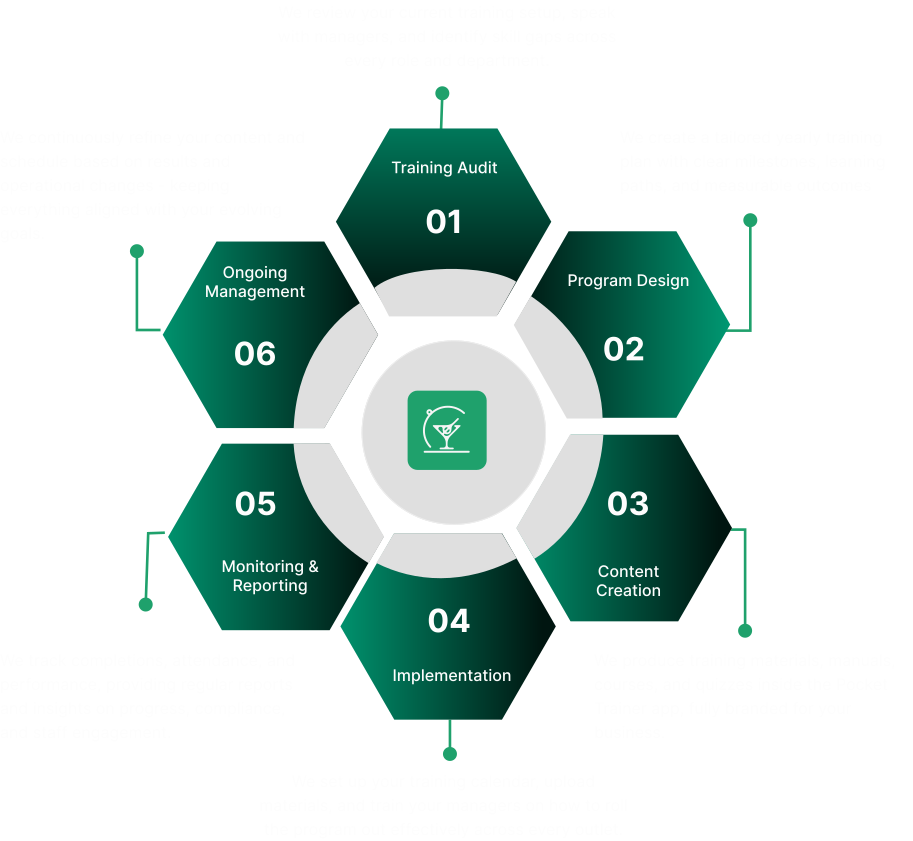
Six stages:
- Training needs analysis: identifying requirements per department and role
- Programme design: a bespoke yearly plan and timeline
- Content creation: custom manuals, courses and quizzes in your branding, scoped in the agreement rather than unlimited
- Implementation: setting up the yearly training calendar and rolling out materials
- Monitoring and reporting: weekly, monthly or quarterly meetings tracking attendance and results
- Ongoing support: continuous updates aligned to compliance and operational changes
Who delivers the service?
Pocket Trainer’s own team, not subcontractors: L&D managers, content writers, researchers, graphic designers, video editors and data entry support. The service is delivered remotely in most cases, through scheduled online meetings and reporting rather than a trainer permanently on site. Once the training plan is built, delivery is allocated to the client’s own heads of department, and Pocket Trainer assigns, tracks and follows up on it. On-site or live delivery happens in some engagements and is agreed case by case rather than assumed. Volto, a club in Bahrain, runs its training on this model.
How often do we get reports?
Reporting cadence is agreed at the start and runs weekly, monthly or quarterly depending on the size of the operation and how fast the programme is rolling out. Meetings cover attendance, completions, results and where the gaps are by department and site. Between meetings, the manager’s dashboard gives live visibility, so nothing waits for the next scheduled review.
What stays our responsibility?
Setting the standards, approving content, and backing the follow-up. Pocket Trainer builds and runs the training system and does the chasing, but it only works if leadership treats completion as expected rather than optional. The platform is identical for every client; the difference in results is whether the operator makes competency mandatory and stands behind it when a manager pushes back.
How is training management priced?
It is a monthly retainer, usually structured in two phases. A higher rate during the planning and set-up phase while the needs analysis, programme design and content build happen, then a lower ongoing rate once the programme is running. Set-up typically runs around three months. Pricing depends on the number of outlets, departments and the volume of content required.
Can we start with training management and take it in-house later?
Yes. That is a common route. The programme, calendar and content sit in the client’s own platform account throughout, so bringing training in-house means handing the system to a new internal hire rather than rebuilding it. Many groups use the service to get a structured programme running, then reduce the retainer to ongoing support once they have someone in post.
How is this different from just buying the platform?
Buying the platform gives an operator the tool. Training management gives them the tool plus the people who build and run the programme inside it. Most operators who realise they need an LMS are not yet ready to run one, and most providers hand over the software and leave the client to it. Training management exists for the gap between owning a platform and having a functioning training operation.